How Should Florists Store Dried Flowers?
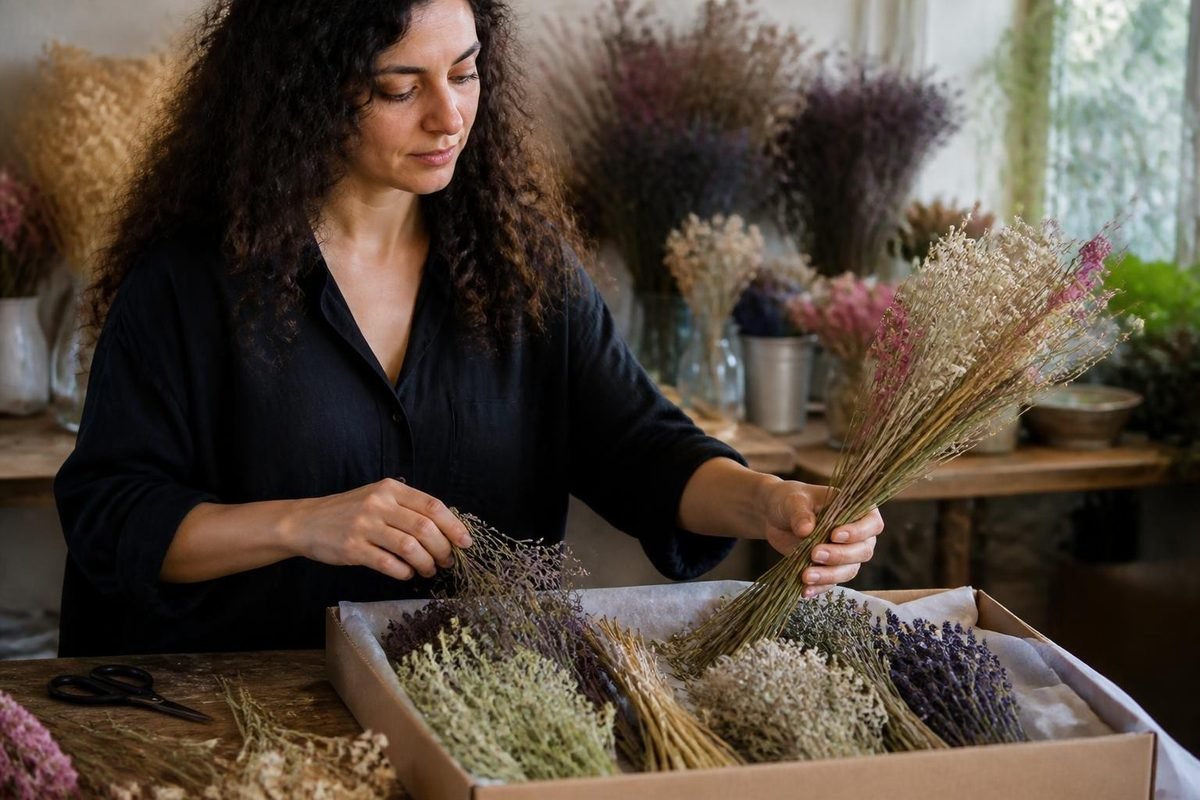
Store dried flowers in a cool, dry, dark place where they will not be crushed or disturbed. Sort them by type and size, then use breathable wrapping or roomy containers to protect the stems and heads between projects.
Choose a suitable space
Pick a cupboard, shelf, or storage room away from direct sunlight and sources of heat. Light can fade petals and stems, while heat can make already brittle material more fragile. Keep flowers away from windows, radiators, and strong lamps.
Moisture is a concern. Avoid damp basements, bathrooms, and spaces where condensation collects. Dried flowers can absorb moisture from humid air, which may soften them or encourage mold. A stable indoor space is a better choice than a shed exposed to changing weather.
Keep stock off the floor and away from exterior walls if those areas tend to be damp. Leave enough room around stored bundles to reach them without pulling other flowers out of place.
Sort and support the stems
Group flowers by variety and stem length. Keep delicate heads apart from heavier branches, seed pods, and grasses. Small bundles are easier to handle than large ones and put less pressure on the flowers inside.
Use these simple methods to keep stock tidy:
- Lay long stems flat in shallow boxes, with flower heads facing the same direction.
- Place tissue or plain paper between delicate layers.
- Stand sturdy stems upright in clean containers if the heads have enough space.
- Wrap loose bundles in paper to shield them from dust.
- Label each box or bundle so you can find materials without repeated handling.
Do not pack containers tightly. Fragile petals and seed heads can break under pressure, and bent stems may be difficult to use later. If a flower head is especially delicate, give it its own space in a box.
Protect flowers from dust and pests
Covered boxes and paper wrapping help keep dust off. Use clean, dry containers, and check that lids do not press down on the contents. Avoid sealing flowers in plastic if there is any chance they still contain moisture.
Inspect stored material regularly for insects, webbing, mold, or an unusual musty smell. Check new dried flowers before putting them beside existing stock. If you find an affected bundle, separate it from the rest and inspect nearby materials. Discard moldy flowers rather than mixing them into an arrangement.
Keep the storage area clean, and remove fallen leaves and plant debris. These checks also give you a chance to spot fading or damage before a project begins.
Handle stock between projects
Move dried flowers gently and support both the stems and the heads. Take out only what you need, then return unused pieces to their labeled containers. Avoid tying bundles so tightly that the stems snap or the heads rub together.
Keep shorter offcuts in a separate shallow box. They can be useful for small arrangements, but loose pieces mixed with long stems are harder to find and more likely to be crushed.
A little space and regular checking will keep your stored flowers easier to find and ready to use.
Keep reading: first hours of cut flower care
Ends · BLOOMDIARY70